HEALTH CENTER
What's Really in Your Pet's Food? Ingredients Explained
A Practical Guide to Reading Pet Food Labels and Understanding What You Are Really Feeding

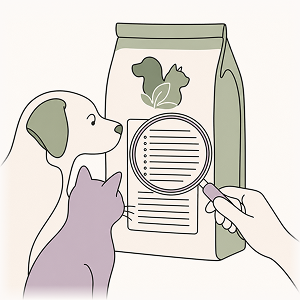
Reading pet food ingredient labels is the first step toward understanding what's really in your pet's food.
Understanding the Ingredients in Your Dog or Cat's Food
Every meal you feed your pet either supports health or works against it. Good nutrition supports a strong immune system, healthy digestion, normal weight, healthy skin and coat, and a longer, healthier life.
Many pet foods are marketed with words such as “natural,” “premium,” and “holistic,” but these words do not tell you about the quality of the food. The front of the package is designed to sell the food, while the ingredient list tells you what is in it.
Understanding what is really in your pet’s food can help you make better choices for your dog or cat.
Why Ingredient Order Matters
Ingredients are listed by weight, so the ingredients near the beginning of the list make up a larger part of the food. Pay close attention to the first several ingredients because they tell you a lot about the quality of the food.
Start With High-Quality Animal Protein
I recommend feeding proteins such as chicken, turkey, beef, lamb, duck, rabbit, venison, salmon, whitefish, and eggs. Named animal meals such as chicken meal, turkey meal, lamb meal, and salmon meal are also good because they provide concentrated sources of animal protein.
There is a difference between chicken meal and meat meal. Chicken meal tells you which animal the ingredient came from. Meat meal does not.
Animal By-Products and Generic Animal Ingredients
Animal by-products are the parts left after the muscle meat has been removed and can include organs, blood, bone, heads, feet, intestines, and other tissues. I do not recommend pet foods containing animal by-products because they are highly processed, the quality varies, and “animal by-products” and “meat by-products” do not identify the animal source.
Avoid these ingredients:
- Meat meal
- Meat-and-bone meal
- Animal by-product meal
- Meat by-products
- Animal by-products
- Animal digest
- Animal fat
Plant Proteins Can Be Misleading
A high protein percentage does not necessarily mean most of that protein comes from meat.
Ingredients such as corn gluten meal, wheat gluten, soybean meal, soy flour, and soy protein isolate can raise the protein percentage on the label.
Two foods can have the same protein percentage but get that protein from very different ingredients. I recommend foods that get most of their protein from meat, poultry, fish, or eggs rather than corn, wheat, or soy.
Corn, Wheat, Soy, and Other Plant Ingredients
Corn, wheat, soy, brewer’s rice, and cellulose are commonly used in pet foods as inexpensive sources of carbohydrates, protein, or fiber.
Wondering what's really in your pet's food?
A conversation about your pet is a good place to start.
Contact Us
Artificial Colors, Flavors, and Sweeteners
Artificial colors make food more appealing to people, not pets, and provide no nutritional benefit. These include Red 40, Yellow 5, Yellow 6, Blue 1, and Blue 2.
Avoid artificial flavors and added sweeteners such as:
- Sugar
- Corn syrup
- Sucrose
- Molasses
There is no reason for dogs and cats to have added sugar in their food.
Preservatives
Preservatives are added to pet food to help keep it fresh. I recommend avoiding BHA and BHT. Look instead for natural preservatives such as mixed tocopherols (vitamin E), ascorbic acid (vitamin C), and rosemary extract.
You can learn more about these preservatives in BHA and BHT in Pet Food: What Every Owner Should Know.
Other Ingredients to Avoid
Propylene glycol is added to some dog foods and treats to help keep them moist. It has no nutritional benefit.
Carrageenan is used as a thickener and stabilizer in some canned foods. It is not nutritionally necessary.
Salt is necessary in appropriate amounts, but I recommend avoiding foods that contain excessive salt simply to improve taste.
Here is an example of the type of ingredient list I would avoid:
Whole Grain Corn, Meat and Bone Meal, Corn Gluten Meal, Animal Fat, Soybean Meal, Wheat, Animal Digest, Brewer’s Rice, Artificial Flavor, Salt, Red 40, Yellow 5, BHA, BHT...
This food relies heavily on corn, soy, wheat, and other inexpensive ingredients, while the animal protein and fat sources are not clearly identified. It also contains artificial colors, flavors, and chemical preservatives.
Watch for Ingredient Splitting
A manufacturer may separate similar ingredients into several names, such as corn, corn meal, and corn gluten meal. Because each is weighed and listed separately, they appear farther down the ingredient list.
An example of this:
Chicken, Corn Meal, Rice, Corn Gluten Meal, Animal Fat, Ground Corn...
Chicken is listed first, so at first glance this looks like a chicken-based food. But when you look at corn meal, corn gluten meal, and ground corn together, it is clear that corn makes up a significant portion of the food.
The first ingredient does not tell the whole story.
What Should You Look for in a Pet Food?
I recommend foods made with clearly identified animal proteins, named sources of fat, recognizable ingredients, and natural preservatives.
Here is an example of a high-quality ingredient list:
Chicken, Turkey, Chicken Meal, Turkey Meal, Brown Rice, Oatmeal, Chicken Fat, Eggs, Pumpkin, Carrots, Blueberries, Salmon Oil, Mixed Tocopherols...
You can easily identify the animal proteins and fat sources, and the other ingredients are foods you recognize.
There is no single food that is right for every dog or cat. Age, weight, activity level, and health problems also need to be considered.
Need Help Reading a Pet Food Label?
For a step-by-step explanation of how to evaluate a package, read How to Read a Pet Food Label: A Simple Guide.
You can also print my Pet Food Label-Reading Checklist and take it to the store for a complete list of ingredients to look for and ingredients I recommend avoiding.
How I Can Help
Choosing the right food for your dog or cat is not always easy. During a consultation, I review your pet's current and previous foods, treats, supplements, medications, weight, age, activity level, health history, and any current health problems before making recommendations.
Every pet is different, so I consider their individual needs when deciding what diet to recommend.
If you are not sure what you should be feeding your dog or cat, contact For Pet Health to schedule a holistic pet nutrition consultation. I can help you put together an individualized nutritional program for your pet.
Frequently Asked Questions
What is really in my pet's food?

Commercial pet food often contains a mix of animal protein, carbohydrates, fats, and additives such as preservatives, flavoring agents, and sometimes artificial colors. The ingredient list, not the packaging, is the most reliable place to find out exactly what is in a given product.
Does "natural" or "premium" on a pet food label mean it is high quality?
No, these are marketing terms rather than regulated quality standards. The ingredient list on the back of the bag is a far more reliable indicator of quality than any word printed on the front.
What is ingredient splitting in pet food?
It is when a manufacturer lists similar ingredients, such as corn meal, corn flour, and corn gluten meal, separately rather than combined. This can push a filler further down the ingredient list and make it look like meat is the main ingredient when it may not be.
What pet food ingredients should I be cautious about?
Vague terms like animal by-products or meat meal, synthetic preservatives, artificial colors, and added sweeteners are all worth a closer look. None of these are automatically dangerous in small amounts, but together they are a sign of a lower quality product.
How do I get better at reading pet food ingredient lists?
Start with the first five ingredients, since they carry the most weight, and look for a clearly named animal protein at the top. For a step-by-step approach, see the companion “How to Read a Pet Food Label” guide and printable checklist.
Important Note
The recommendations in this article are general suggestions for treating your pet naturally. It is important to look at each pet individually and determine what works best, and it is highly recommended that you consider a consultation.
A consultation includes a personalized diet and holistic program, all custom-tailored to your pet's personal needs. This is particularly imperative in pets with complicated health issues, or if you've done outside reading and have conflicting information.
Recommended Articles
A closer look at BHA and BHT in pet food and treats, why some pet owners choose to avoid them, and natural preservative alternatives to look for on labels.
A simple, step-by-step guide to reading pet food labels and spotting quality ingredients.
A printable, at-a-glance checklist for reading pet food labels, so you always know what to look for and what to avoid.