
HEALTH CENTER
Cushing's Disease in Dogs: A Holistic Approach
How diet, supplements, and supportive care can help dogs with Cushing's disease

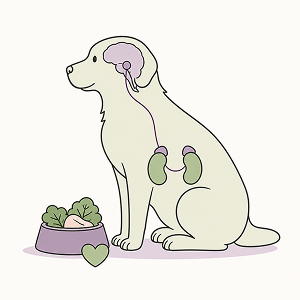
Nutrition can play an important role in supporting dogs with Cushing's disease.
If your dog has been diagnosed with Cushing’s disease, you probably have a lot of questions. You may be concerned about the changes you are seeing and wondering what you can do to keep your dog as healthy as possible.
Medication is often needed, but there is more to consider. Cushing’s can affect muscle, blood sugar, the liver, skin, and the immune system. These changes are why diet and supplements are also an important part of caring for a dog with Cushing’s.
What Is Cushing’s Disease?
Cushing’s occurs when there is too much cortisol in your dog’s body. Cortisol is a hormone that helps the body respond to stress and plays a role in blood sugar, blood pressure, inflammation, and the immune system.
The adrenal glands, located near the kidneys, make cortisol. Normally, a small gland in the brain called the pituitary gland tells the adrenal glands how much cortisol to produce.
In most dogs with Cushing’s, a growth on the pituitary gland sends too many signals to the adrenal glands, causing them to produce too much cortisol. In other dogs, a growth on one of the adrenal glands causes too much cortisol to be produced.
Signs of Cushing’s Disease
Common signs include:
- Drinking much more water
- Urinating more often
- Increased appetite
- Excessive panting
- A pot-bellied appearance
- Muscle loss and weakness
- Thinning hair or hair loss
- Thin skin
- Repeated skin or urinary infections
Cushing’s is most common in middle-aged and older dogs. Because the changes often happen gradually, they can sometimes be mistaken for normal aging.
Not sure what to feed a dog with Cushing's disease?
A conversation about your pet is a good place to start.
Contact Us
Why Does a Dog With Cushing’s Lose Muscle?
Too much cortisol causes the body to break down protein in the muscles. As muscle is lost, the legs can become thinner and weaker. Loss of muscle around the abdomen also contributes to the pot-bellied appearance commonly seen with Cushing’s.
Why Can Blood Sugar Become a Problem?
Cortisol helps raise blood sugar when the body needs extra energy. Normally, this is a temporary response. With Cushing’s, too much cortisol keeps more sugar circulating in the bloodstream.
Over time, cortisol can also interfere with the way insulin works, making it harder for sugar to move from the blood into the cells. This is why dogs with Cushing’s have an increased risk of developing diabetes.
Why Are Liver Values Often High?
Too much cortisol can cause changes in the liver and increase certain liver enzymes. This is why dogs with Cushing’s often have elevated liver values on their blood work.
High liver values do not automatically mean your dog has liver disease.
What Should You Feed a Dog With Cushing’s?
Start with high-quality animal protein. Chicken, turkey, lean beef, eggs, and fish are good choices.
Use vegetables for the carbohydrate and fiber in the diet. Green beans, broccoli, zucchini, cauliflower, and leafy greens are good choices because they provide nutrients and fiber without adding large amounts of starch.
Other carbohydrate sources can be used depending on the dog, but a diet made up largely of high-starch ingredients is not a good choice for a dog already having problems with blood sugar.
For example, some good combinations include:
Turkey, green beans, broccoli, zucchini, egg…
Or:
Lean beef, cauliflower, green beans, leafy greens, egg…
Pay attention to fat
Cushing’s can cause cholesterol and triglycerides to increase, therefore, fatty meats, high-fat treats, and added oils may need to be reduced.
Choose treats carefully. Treats made mainly from flour, starch, sugar, or sweeteners add ingredients the dog does not need. Small pieces of lean meat or vegetables are better choices for your dog.
For help choosing a high-quality food, read Pet Food Label Reading Checklist: Ingredients to Look For and Avoid.
What About Supplements?
Supplements are an important part of a nutritional program, but they should have a specific purpose.
Liver support may be needed when liver values are elevated. SAMe and milk thistle are commonly used for liver support, but the product and amount should be based on the individual dog.
Omega-3 fatty acids from fish oil can help support the skin and coat and have anti-inflammatory benefits, but fish oil is still a source of fat. If triglycerides are very high or your dog has another condition that requires fat to be limited, this needs to be considered before adding fish oil.
Be careful with products labeled “adrenal support.” Cushing’s is a condition involving too much cortisol. An adrenal supplement should not be given simply because the word “adrenal” appears on the bottle. Look at each ingredient and know why it is being given.
How I Can Help
Two dogs with Cushing’s can have very different nutritional needs. One may be losing muscle, while another may have high blood sugar, high triglycerides, or other health problems that completely change what should be fed. This is why an individualized nutrition program is so important.
During a consultation, your dog’s diet, blood work, medications, weight, muscle condition, current supplements, and other health problems are all reviewed together. This helps determine what foods should be changed, what your dog should be eating, and which supplements can provide the most benefit.
Cushing’s can affect many areas of your dog’s health, and simply choosing a food labeled for senior dogs or adding an adrenal supplement is not enough. The right nutritional program can help support muscle, blood sugar, liver health, skin and coat, and your dog’s overall health while Cushing’s is being treated.
If your dog has Cushing’s disease, contact For Pet Health to schedule a holistic pet nutrition consultation and get a nutritional program designed specifically for your dog.
Frequently Asked Questions
Why do dogs with Cushing’s disease often lose muscle?

Too much cortisol causes the body to break down protein in the muscles. Over time, the legs can become thinner and weaker. Muscle loss around the abdomen can also contribute to the pot-bellied appearance often seen in dogs with Cushing’s.
Why can Cushing’s disease cause high blood sugar?
Cortisol raises blood sugar when the body needs extra energy. With Cushing’s disease, too much cortisol keeps more sugar circulating in the bloodstream and can interfere with the way insulin works. This is why dogs with Cushing’s have an increased risk of developing diabetes.
What should I feed a dog with Cushing’s disease?
Start with high-quality animal protein such as chicken, turkey, lean beef, eggs, or fish. Vegetables such as green beans, broccoli, zucchini, cauliflower, and leafy greens are good choices for carbohydrates and fiber without adding large amounts of starch. Fat may also need to be limited if cholesterol or triglycerides are high.
Are supplements helpful for dogs with Cushing’s disease?
Yes, but every supplement should have a specific purpose. Some dogs may need liver support, while others may benefit from omega-3 fatty acids for skin, coat, and inflammation. Supplements should be chosen based on the individual dog and the health problems that need support.
Should I give my dog an adrenal support supplement for Cushing’s disease?
Not simply because the product says “adrenal support.” Cushing’s disease involves too much cortisol, so an adrenal supplement should not automatically be added. Look at each ingredient and understand why it is being given before adding it to your dog’s nutritional program.
Important Note
The recommendations in this article are general suggestions for treating your pet naturally. It is important to look at each pet individually and determine what works best, and it is highly recommended that you consider a consultation.
A consultation includes a personalized diet and holistic program, all custom-tailored to your pet's personal needs. This is particularly imperative in pets with complicated health issues, or if you've done outside reading and have conflicting information.
Recommended Articles
A guide to recognizing the signs of diabetes in dogs and cats, and how nutrition can play a central role in managing blood sugar and overall health.
A simple, step-by-step guide to reading pet food labels and spotting quality ingredients.
A guide to recognizing the signs of liver disease in dogs and cats, understanding common contributing factors, and supporting liver health through nutrition.
A printable, at-a-glance checklist for reading pet food labels, so you always know what to look for and what to avoid.
A complete guide to evaluating pet food ingredients, from misleading marketing terms to a glossary of common additives, so you can choose a diet that truly supports your dog or cat's health.