HEALTH CENTER
What to Expect From a Holistic Pet Nutrition Consultation
See how a nutritional program is developed specifically for your pet.

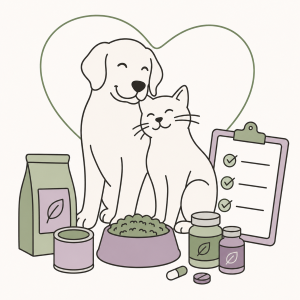
A holistic pet nutrition consultation looks at your pet’s diet, supplements, health concerns, and individual nutritional needs.
When your dog or cat has a health problem, figuring out what to feed can become confusing very quickly. You may be wondering whether the food you are feeding is helping, which supplements your pet needs, or whether something you are currently giving should be changed.
A holistic pet nutrition consultation goes far beyond simply recommending a food or supplement. Your pet’s diet, supplements, medications, blood work, and health problems are all considered together to develop a nutritional program based on what your pet needs.
The Work Begins Before Your Consultation
Before the consultation, you will complete a detailed evaluation that asks questions about your pet’s health, diet, medications, supplements, symptoms, and lifestyle. Recent blood work is requested which can show health changes that need to be considered when making diet and supplement recommendations.
The completed evaluation and blood work are reviewed before the consultation. From there, research begins based on your pet’s individual health and nutritional needs. Foods, ingredients, supplements, and other products are evaluated before recommendations are made.
Much of this research is completed ahead of time, so a great deal of work has already gone into your pet’s nutritional program before the consultation begins.
Not sure what your pet really needs?
A conversation about your pet is a good place to start.
Contact Us
Your Pet’s Current Diet Is Reviewed
Everything your pet eats is reviewed as part of the consultation. This includes their regular food, treats, toppers, homemade foods, oils, supplements, and anything else they are given on a regular basis.
The ingredients in each food and product are reviewed to determine what is working, what should be changed, and whether anything your pet is eating could be working against their health.
The entire diet is looked at together rather than evaluating one food or supplement by itself. Something that seems like a good choice on its own may not be the best choice when your pet’s health problems, blood work, medications, and overall nutritional needs are taken into consideration.
This complete review provides the starting point for developing a nutritional program specifically for your pet.
Diet Recommendations Are Based on Your Pet
One of the most important parts of the consultation is determining what to feed your pet. You will receive several feeding options, so you can choose what works best for you and your pet.
Your consultation includes:
- Specific dry food recommendations
- Specific canned food recommendations
- Specific freeze-dried food recommendations
- Fresh prepared diet recommendations that can be delivered to your home
- Several homemade recipes formulated around your pet’s health needs
- Protein, vegetable, carbohydrate, and other food choices for homemade diets
Commercial foods are researched and specific products are recommended based on their ingredients and your pet’s health needs, so you know exactly which foods to consider.
The homemade recipes are not generic. Each recipe is formulated around your pet’s health problems, with several recipes and food choices provided.
You will know what to feed, how much to feed, and have several options to choose from.
Blood Work Can Change Nutritional Recommendations
Blood work can show health changes that need to be considered when deciding what to feed your pet. For example, a dog with Cushing’s may be losing muscle but have normal triglycerides. Another dog with Cushing’s may have very high triglycerides or elevated blood sugar. Feeding both dogs the same way would not make sense.
The same is true with kidney disease, liver problems, diabetes, pancreatitis, and many other conditions.
Finding the Right Supplements for Your Pet
Choosing supplements is one of the most detailed parts of the consultation. There are thousands of pet supplements available, and two products sold for the same purpose can have different ingredients, quality, and amounts.
Each supplement recommendation requires research and your pet’s health problems, blood work, medications, diet, and current supplements are all considered before deciding what to recommend.
This includes:
- Reviewing every supplement your pet is currently taking and its ingredients
- Determining which current supplements should be continued, changed, or eliminated
- Researching supplements for your pet’s specific health problems
- Comparing products and ingredients rather than simply recommending a brand
- Checking for ingredients that may not be a good choice with your pet’s other health problems
- Considering medications and other supplements already being given
- Providing the specific products recommended for your pet
- Providing the amount to give and instructions for introducing each supplement
The goal is not to give your pet a long list of supplements. It is to find the ones that can provide the most benefit for your individual pet and make sure there is a reason for everything being given.
Treats Are Part of the Nutritional Program
Treats are part of your pet’s diet, so every treat your pet is currently eating is reviewed along with the food. Ingredients are looked at to determine whether they fit your pet’s nutritional and health needs.
Your consultation includes:
- A review of the ingredients in your pet’s current treats
- An explanation of which treats should be changed and why
- Specific recommendations for better treat choices
- Treat options that fit your pet’s health needs and nutritional program
Medications Are Taken Into Consideration
Medications are taken into consideration when making diet and supplement recommendations. This is important because medications can affect appetite, digestion, blood sugar, liver values, and other areas of your pet’s health. They can also affect which supplements should be used.
The nutritional program is developed with your pet’s medications in mind, rather than looking at diet and supplements separately.
Lifestyle Is Part of the Consultation
Lifestyle and environmental factors are also looked at as part of the consultation. Depending on the pet, this may include weight, exercise, household products, flea and tick products, dental products, shampoos, and other things your pet is regularly exposed to.
The goal is to identify everyday changes that can support your pet’s health and become part of the overall nutritional program.
What Does a Consultation Actually Look Like?
One consultation involved a dog with seizures. The owner wanted to know what could be done nutritionally to help reduce the seizures and support the dog’s overall health.
Before recommendations were made, the dog’s health history, medications, current diet, treats, and supplements were reviewed. Because seizures can have many contributing factors, the focus was not on finding one food or one supplement. The goal was to look at the dog’s complete nutritional picture and develop a program based on their individual needs.
For this dog, the consultation included:
- Reviewing the ingredients in the current food and treats
- Providing several specific commercial food choices
- Formulating several homemade recipes
- Explaining which ingredients should be avoided and why
- Reviewing every supplement the dog was already receiving
- Researching additional supplements based on the dog’s individual needs
- Providing the exact supplement products and amounts to give
- Recommending better treat choices
- Making lifestyle recommendations
- Providing a step-by-step plan for introducing the changes
By the end of the consultation, the owner did not simply have a list of foods and supplements. They understood what to feed, which supplements to use, what needed to be changed, why those changes were being made, and how to put the entire program into place.
This is just one example. Every consultation is different because every pet’s health problems are different.
What Do You Receive After the Consultation?
Everything discussed during the consultation is put into a detailed written nutritional plan that brings all of the recommendations together and gives you something you can refer back to at any time.
Your written plan includes:
- A review of your pet’s current diet and what should be changed
- Specific dry food recommendations
- Specific canned food recommendations
- Specific freeze-dried food recommendations
- Fresh prepared food options delivered to your home
- Several homemade recipes formulated around your pet’s health needs
- Feeding amounts and instructions
- Protein, vegetable, carbohydrate, and other food choices for homemade diets
- A review of the treats your pet is currently eating
- Specific recommendations for better treat choices
- A review of every supplement your pet is currently taking
- An explanation of which supplements should be continued, changed, or eliminated
- Specific supplement recommendations based on your pet’s health needs
- The exact products recommended rather than simply a type of supplement to look for
- The amount of each supplement to give
- Instructions for introducing new supplements
- Recommendations that take your pet’s medications into consideration
- Lifestyle changes based on your pet’s individual needs
- Product recommendations and information when needed
- Articles, links, and additional information to help you better understand your pet’s health
- A step-by-step plan for putting the diet, supplement, and lifestyle changes into place
Why Is an Individual Consultation So Important?
There is an enormous amount of information online about what to feed a pet with a particular health condition and which supplements to give. The problem is that the advice is usually based on the condition, not the individual pet.
Two dogs with the same diagnosis can have completely different nutritional needs. One may be overweight while another is losing muscle. One may have normal blood work while another has high liver values, or kidney problems. They may be taking different medications, eating different foods, and already receiving several supplements.
Following general recommendations without looking at the whole picture can mean choosing a food that does not meet your pet’s needs, adding supplements your pet does not need, or overlooking another health problem that should change the nutritional program.
A consultation takes the guesswork out of trying to put all this information together yourself. The result is not a general diet for Cushing’s, kidney disease, cancer, seizures, pancreatitis, or another condition. It is a nutritional program developed for your pet.
How I Can Help
When your pet has a health problem, you want to know that you are doing everything you can to help. Nutrition can be an important part of that, but knowing which choices will actually benefit your pet is not always easy.
That is what a holistic pet nutrition consultation is designed to do. It gives you clear direction and the confidence of knowing that the recommendations have been researched specifically for your pet, rather than based on general advice for a particular condition.
If your dog or cat is dealing with a health condition, nutrition can play an important role in supporting their health. Contact For Pet Health to schedule a holistic pet nutrition consultation and receive a nutritional program developed specifically for your pet.
Frequently Asked Questions
What is included in a holistic pet nutrition consultation?

Your pet’s health, diet, blood work, medications, supplements, treats, and lifestyle are reviewed. Research is done based on your pet’s individual needs, and you receive specific diet, supplement, and lifestyle recommendations.
Do you recommend specific foods for my pet?
Yes. You receive several feeding options, including specific dry, canned, freeze-dried, and fresh prepared foods. Several homemade recipes formulated around your pet’s health needs are also provided.
Can you help if my pet has more than one health condition?
Yes. This is one of the reasons an individualized consultation is so valuable. All of your pet’s health problems are considered together when diet and supplement recommendations are developed.
Will I receive a written plan after the consultation?
Yes. You receive a detailed written nutritional program that includes the recommendations discussed during the consultation, including foods, homemade recipes, feeding amounts, supplements and dosages, treats, lifestyle recommendations, and instructions for getting started.
Can you work with my pet if they are taking medications?
Yes. All medications are requested on the evaluation and are taken into consideration when diet and supplement recommendations are made.
Important Note
The recommendations in this article are general suggestions for treating your pet naturally. It is important to look at each pet individually and determine what works best, and it is highly recommended that you consider a consultation.
A consultation includes a personalized diet and holistic program, all custom-tailored to your pet's personal needs. This is particularly imperative in pets with complicated health issues, or if you've done outside reading and have conflicting information.
Recommended Articles
An introduction to holistic pet nutrition: what it means, how it works, and why a personalized approach matters for your pet's health.