HEALTH CENTER
Rolling Skin Syndrome in Cats: Understanding Feline Hyperesthesia
Recognizing the Early Signs and Supporting Your Cat Naturally, Without Guesswork

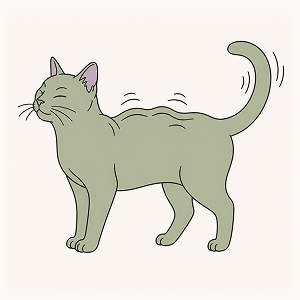
Rolling Skin Syndrome causes rippling skin and tail sensitivity in cats.
Is your cat biting at himself, sensitive to touch, or showing erratic behavior? Your cat may have Feline Hyperesthesia Syndrome, commonly known as Rolling Skin Syndrome.
Feline Hyperesthesia Syndrome, also known as "rolling skin syndrome," is in some ways very similar to a seizure disorder.
Symptoms of Feline Hyperesthesia Syndrome or Rolling Skin Syndrome:
- Dilated pupils
- Twitching of the tail
- Appearing to be annoyed with the tail
- Biting at the tip of the tail, sometimes to the point of mutilation
- Behavior may change from loving to scared and depressed
- Sensitive to touch around the tail
- Staring into space
- Persistent, loud meowing
- Dashing off madly and aimlessly around the house or yard
- Rippling skin on the back just above the tail
Below are videos of cats with Feline Hyperesthesia Syndrome (FHS). These symptoms are not always triggered by unpleasant events but can occur while you are petting or touching your cat near the tail.
Is your cat biting or twitching at his tail, or acting strangely out of nowhere?
A conversation about your pet is a good place to start.
Contact Us
Factors That May Contribute to Feline Hyperesthesia Syndrome
Food & Diet
- Low-quality foods and treats
- Animal by-products
- Artificial food dyes
- Excess sugar
- Cigarette smoke
- Strong household cleaners
- Air fresheners
- Scented candles
- Paint fumes
- Lawn chemicals
- Mold
Artificial Preservatives and Food Additives
- Artificial preservatives such as BHT and BHA
- Ethoxyquin
- Artificial food additives
- Sodium nitrate
- Titanium dioxide
Chemical Exposure
- Chemical flea products
- Toxic shampoos
- Toxic flea collars
Supporting Feline Hyperesthesia Syndrome Naturally
A prevention plan focuses on improving nutrition, making lifestyle changes, and addressing your pet's individual needs. Below are some suggestions for naturally supporting a cat with FHS.
Rule Out Other Health Problems
Ask your veterinarian to rule out other health problems such as thyroid disease, diabetes, cancer, liver or kidney disease.
Promote a Healthy Lifestyle
Poor nutrition may contribute to many health problems. Therefore, a commitment to optimum health and longevity for your pet must include a high-quality diet.
A low-quality diet loaded with chemicals, fillers, stabilizers, coloring agents, and sodium nitrate is not the healthiest choices for your pet. By-products in pet food may lead to allergies, nervousness, hypertension, diabetes, weight problems, dry skin, and many other common ailments.
A homemade diet is recommended. However, home cooking does not fit into everyone's lifestyle, so it is essential to choose a high-quality dry or canned food.
Not sure what to look for in your pet’s food? Use my Pet Food Label Reading Checklist: Ingredients to Look For and Avoid.
Structure Mealtimes
Some pets suffer from hypoglycemia. Some symptoms of hypoglycemia can look similar to Feline Hyperesthesia Syndrome.
Symptoms of a hypoglycemic attack include:
- Staggering, collapse, or dashing around
- Weakness
- Aggression
- Moodiness
- Glassy eyes, dilated pupils
- Seizures
Because some of these symptoms can be similar to FHS, I recommend feeding several small meals throughout the day rather than one large meal.
Recommended feeding schedule:
- Breakfast: A high-quality pet food or homemade food
- Lunch: A high-quality pet food or homemade food
- Dinner: A high-quality pet food or homemade food
- Before bed: Snack
If your cat is taking medication for FHS, do not discontinue it without first talking to your veterinarian.
Schedule a Consultation
Every cat with FHS is different. I look at your cat's diet, symptoms, health history, medications, lifestyle, and any other health problems before making nutritional recommendations.
During a consultation, I will develop a nutritional and holistic program based on your cat's individual needs. If you would like help naturally supporting your cat with Feline Hyperesthesia Syndrome, contact For Pet Health to schedule a consultation.
Frequently Asked Questions
What is Feline Hyperesthesia Syndrome?

Feline Hyperesthesia Syndrome (FHS), also called Rolling Skin Syndrome, is a condition where cats become unusually sensitive along their back and tail, along with behavior changes like twitching, tail-biting, or dashing around erratically. It shares some features with seizure disorders.
Is Rolling Skin Syndrome the same as a seizure disorder?
Not exactly, but FHS overlaps with some neurological symptoms seen in seizures. That is why ruling out other health issues with your vet is an important first step before addressing FHS through nutrition.
What causes Feline Hyperesthesia Syndrome?
There is rarely one single cause. Diet is often a factor — low-quality food, preservatives like BHA and BHT, and artificial dyes have all been linked to FHS symptoms in some cats — along with environmental triggers like household chemicals or scented products.
What are the signs my cat may have FHS?
Common signs include dilated pupils, tail twitching or biting, sensitivity to touch near the tail, sudden mood changes, persistent meowing, and dashing around without an obvious trigger.
How can I help my cat with FHS naturally?
It starts with ruling out other health issues, then improving diet quality, structuring regular mealtimes, and reducing exposure to environmental irritants. Every cat is different, so a personalized nutrition plan can help pinpoint what's really triggering your cat's symptoms.
Important Note
The recommendations in this article are general suggestions for treating your pet naturally. It is important to look at each pet individually and determine what works best, and it is highly recommended that you consider a consultation.
A consultation includes a personalized diet and holistic program, all custom-tailored to your pet's personal needs. This is particularly imperative in pets with complicated health issues, or if you've done outside reading and have conflicting information.
Recommended Articles
A complete guide to evaluating pet food ingredients, from misleading marketing terms to a glossary of common additives, so you can choose a diet that truly supports your dog or cat's health.
A closer look at BHA and BHT in pet food and treats, why some pet owners choose to avoid them, and natural preservative alternatives to look for on labels.
A complete guide to the causes and triggers of seizures in dogs and cats, plus a step-by-step holistic plan covering diet, blood sugar, and environmental support.
A printable, at-a-glance checklist for reading pet food labels, so you always know what to look for and what to avoid.