HEALTH CENTER
Probiotics for Dogs and Cats: Rebuilding Gut Health Naturally
Why a Healthy Gut Is the Foundation of Overall Wellness

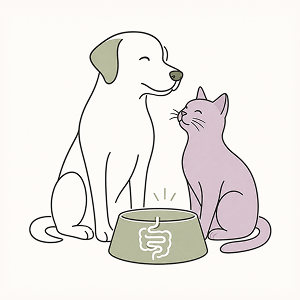
Probiotics may help restore balance to your pet's gut, one meal at a time.
What Are Probiotics for Dogs and Cats?
You have probably seen probiotics on the shelf at a pet store and wondered what they are. Simply put, a probiotic is a supplement you give your dog or cat to add more of the "good" bacteria that naturally live in the digestive tract. Probiotics come in powders, capsules, chews, or pastes, so you should be able to find one that even the finickiest pet will take.
Once your pet eats the probiotic, the good bacteria go to work. They help break down food, absorb nutrients, and keep the digestive system working properly. Good bacteria also help keep harmful bacteria from taking over in the digestive tract. When the balance is disrupted, digestive problems can develop.
Several things can reduce the amount of good bacteria in the digestive tract, including:
• Antibiotics
• Poor diet
• Stress
• Illness
• Parasites
• Aging
Not sure if your pet's digestive symptoms call for a probiotic, a diet change, or both?
A conversation about your pet is a good place to start.
Contact Us
Does Your Dog or Cat Need Probiotics?
Probiotics may be helpful if your dog or cat has digestive problems or has recently been on antibiotics. Some reasons I may consider adding a probiotic include:
- Constipation
- Diarrhea
- Excessive gas
- Bloating
- A sensitive stomach
- Vomiting
- Poor appetite
- Food allergies or food sensitivities
- Inflammatory Bowel Disease (IBD)
- Irritable Bowel Syndrome (IBS)
Choosing a High-Quality Probiotic
Not all probiotics are high-quality. Some are made with fillers, flavorings, and ingredients that have little nutritional value. In my opinion, a probiotic should contain more of the ingredients you are looking for and fewer unnecessary fillers.
Take a look at this ingredient list:
Bacillus coagulans, Bacillus subtilis, Saccharomyces boulardii, Flaxseed, Garbanzo Flour, Natural Flavor, Natural Vegetable Flavor, Palm Oil, Pea Protein, Tapioca Starch, Vegetable Glycerin
I would not recommend this product. It does contain probiotics, but it also contains several fillers that I do not believe belong in a probiotic.
Here is another example:
Brewer’s Dried Yeast, Glycerin, Dried Cheese, Natural Flavors, Dried Lactobacillus Acidophilus Fermentation Product, Dried Bifidobacterium Bifidum Fermentation Product, Corn Starch, Canola Oil, Soy Lecithin…
Again, I would not recommend this product because several fillers appear before the probiotic ingredients.
Now compare those products to this ingredient list:
Dried Lactobacillus acidophilus fermentation product, Dried Lactobacillus casei fermentation product, Dried Lactobacillus salivarius fermentation product, Dried Lactobacillus plantarum fermentation product… Dried Bifidobacterium lactis fermentation product, Dried Streptococcus thermophilus fermentation product, Fructooligosaccharide…
Notice the difference? This product is made mostly from probiotic ingredients instead of fillers, and that is exactly what I look for when recommending a probiotic.
Even then, I do not recommend the same probiotic for every pet. The probiotic I recommend depends on your pet's symptoms, diet, health history, and any medications they are taking.
What to Expect From a Consultation
If your pet continues to have digestive problems, simply adding a probiotic may not be enough. I want to know why the problem keeps happening and what else may need to change.
A consultation starts before we actually meet. I spend time reviewing your pet's health records, current diet, medications, supplements, and the information you provide on the evaluation form. I also want to know when the digestive problems started, how often they happen, and what you have already tried.
I use this information along with my research to put together a nutritional and holistic program for your pet.
During the consultation, we go through the entire program together. I explain what to feed, which supplements I recommend, whether your pet needs a probiotic and, if so, which one. I also explain why I am recommending each change and answer your questions.
After the consultation, I will send you everything we discussed in a detailed written program, including my evaluation of your pet's current diet, food recommendations, supplements, feeding instructions, and other changes I feel may be helpful.
If your dog or cat continues to have digestive problems and you would like help figuring out what may be contributing to them, contact For Pet Health to schedule a holistic pet nutrition consultation.
Frequently Asked Questions
Do dogs and cats need probiotics?

Not every pet needs one, but pets recovering from antibiotics, dealing with digestive upset, or under stress often benefit. Individual need depends on the pet's health history.
What are the signs my dog needs a probiotic?
Gas, loose stools, recurring yeast issues, or digestive upset following antibiotics or illness can all be signs. Persistent symptoms should be checked by a vet first.
Can I give my cat a human probiotic?
Pet-specific strains are recommended rather than human products, since the bacteria that benefit people aren't necessarily the same ones a cat's gut needs.
How long does it take for probiotics to help a dog's gut health?
Timelines vary by pet and underlying cause; some notice improvement within days, others need a longer, more individualized approach paired with diet changes.
Should I give my dog a probiotic after antibiotics?
Often, yes. Antibiotics can deplete beneficial bacteria along with harmful bacteria. A quality probiotic, combined with wholesome nutrition, can help restore a healthy balance in the digestive system. The right probiotic depends on the individual pet.
Important Note
The recommendations in this article are general suggestions for treating your pet naturally. It is important to look at each pet individually and determine what works best, and it is highly recommended that you consider a consultation.
A consultation includes a personalized diet and holistic program, all custom-tailored to your pet's personal needs. This is particularly imperative in pets with complicated health issues, or if you've done outside reading and have conflicting information.
Recommended Articles
A holistic look at how antibiotics affect your pet's intestinal microbiome, and what it takes to rebuild gut health for good.
A holistic guide to identifying what causes colitis in dogs and cats, and how diet, stress management, and natural support can prevent it from returning.
A guide to why digestive enzymes matter for pets, the signs your dog or cat may need them, and natural ways to support healthy digestion.
A guide to recognizing Inflammatory Bowel Disease in dogs and cats, what may be contributing to it, and how a personalized natural approach can help manage symptoms.
A guide to recognizing Irritable Bowel Syndrome in dogs and cats, what triggers flare-ups, and how a natural approach can help manage symptoms.
A complete guide to recognizing pancreatitis symptoms in dogs and cats, understanding acute versus chronic cases, and building a natural, individualized recovery plan.
A guide to recognizing Giardia symptoms in dogs and cats, how it's diagnosed, and natural ways to support your pet's recovery.